
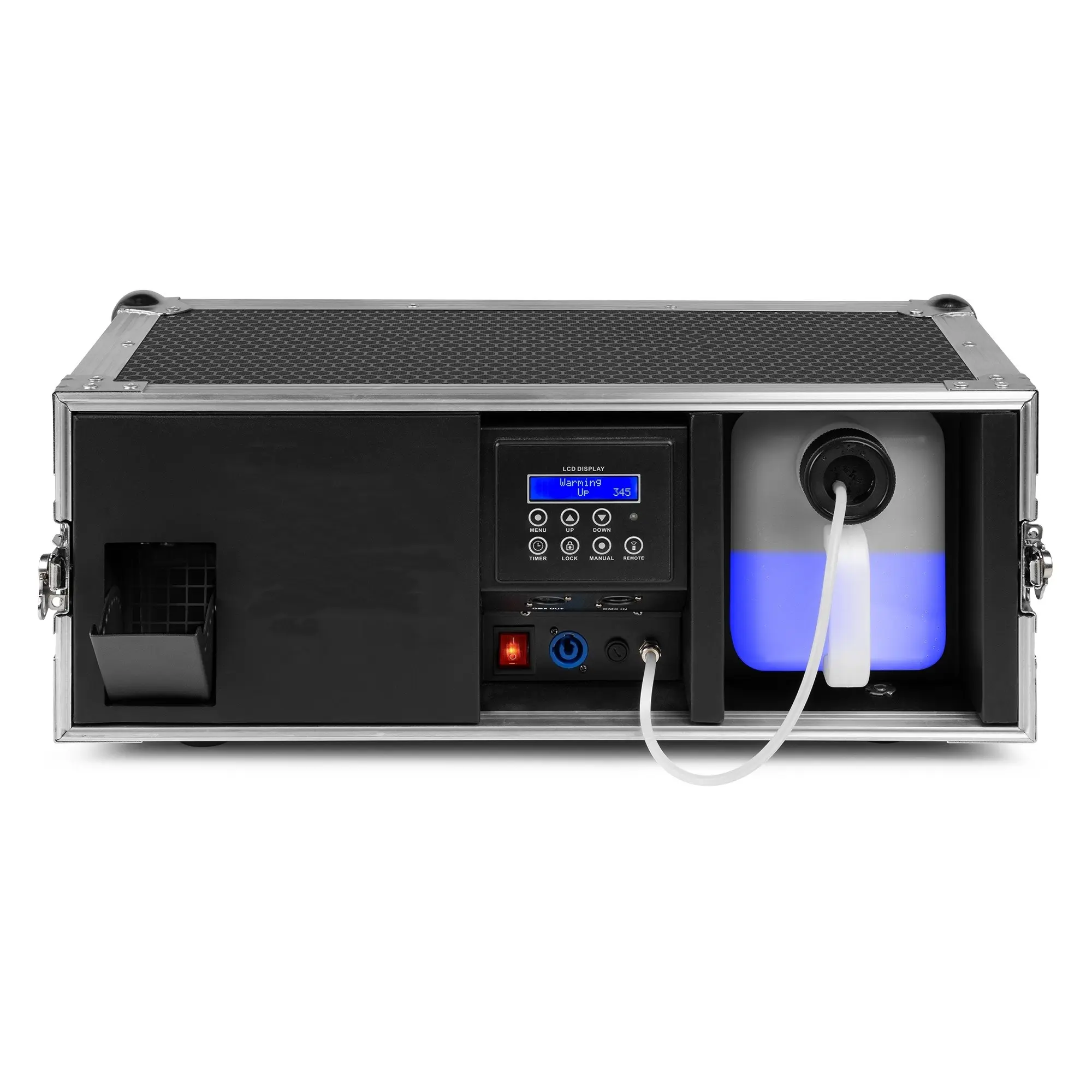
The first time I used a haze machine on stage, I expected thick fog. Instead, I saw almost nothing—until the lights came on. Suddenly, every beam looked three-dimensional. That moment completely changed how I understood atmospheric effects.
A haze machine is a device that produces a fine atmospheric mist designed to enhance the visibility of light beams without creating dense fog. It works by processing specialized haze fluid into microscopic particles and distributing them evenly through the air using internal fans or compressors.
Unlike fog machines that create visible clouds, haze machines are built for subtlety, consistency, and long suspension time.
How Does a Haze Machine Create Thin Fog?

When I first opened one up for inspection, I was surprised how simple yet precise the system was. But the real magic is in particle size.
Particle Size Is Everything
Haze machines create much smaller particles than fog machines. These microscopic particles:
- Stay suspended longer
- Do not significantly block visibility
- Only become visible when light passes through
That’s why haze feels “invisible” until lighting is activated.
Two Main Working Principles
1️⃣ Water-Based Haze Machines
In water-based hazers, a pump pushes haze fluid into a heated chamber. The fluid vaporizes rapidly and exits through a nozzle. As it cools, it forms extremely fine particles.
From testing different units, I’ve noticed:
- Warm-up time is required
- Output can be adjusted
- Proper cleaning prevents clogging
2️⃣ Oil-Based Haze Machines
Oil-based hazers typically use an air compressor to atomize mineral oil into ultra-fine droplets. They do not rely on high heat like fog machines.
What stands out in real use:
- Very smooth, even haze
- Extremely long hang time
- Minimal visible bursts
Internal Components Overview
| Component | Function |
|---|---|
| Fluid tank | Stores haze fluid |
| Pump or compressor | Moves fluid into system |
| Heating chamber / atomizer | Converts fluid into particles |
| Internal fan | Distributes haze evenly |
| Control panel / DMX | Adjusts output level |
The internal fan plays a bigger role than most people realize. Without proper airflow, the haze would not spread evenly across the venue.
What Fluid Does a Haze Machine Use?
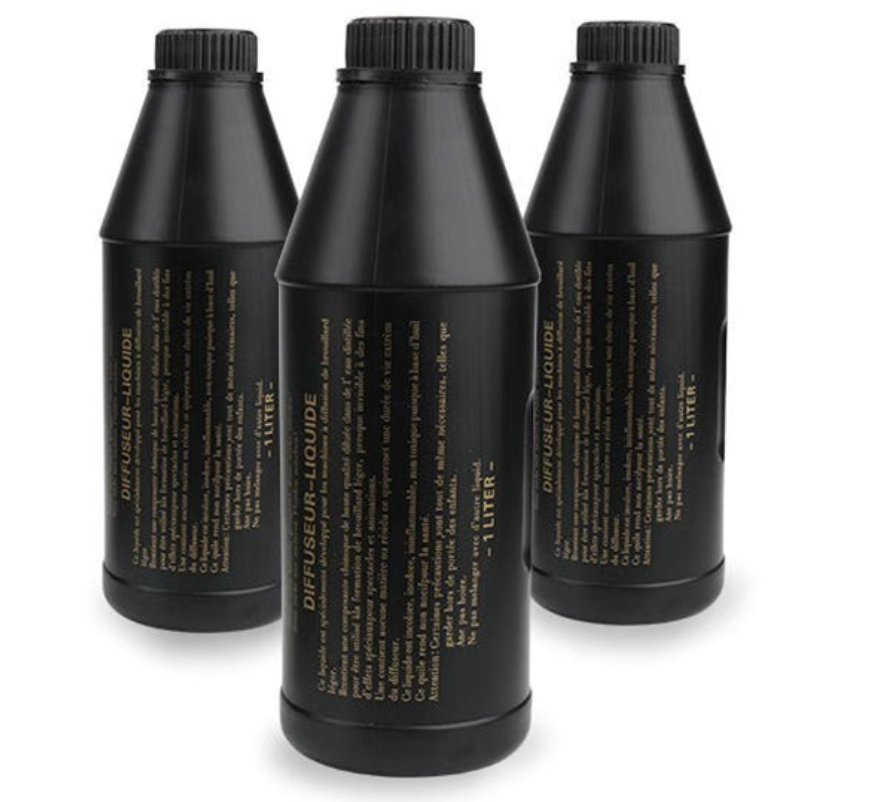
I once saw someone pour fog fluid into a hazer to “save money.” It did not end well. Output became unstable, and cleaning took hours.
Haze machines use specially formulated haze fluid, either water-based or oil-based, designed to produce extremely fine particles with long suspension time. Fluids are not interchangeable between haze and fog machines.
Types of Haze Fluid
Water-Based Haze Fluid
- Glycol or glycerin diluted with water
- Cleaner operation
- Popular in theaters and churches
Oil-Based Haze Fluid
- Refined mineral oil
- Extremely long hang time
- Often used in touring productions
Why Compatibility Matters
Using incorrect fluid may cause:
- Heater damage
- Blocked internal passages
- Reduced output quality
- Residue buildup
Proper ventilation is also essential, especially in enclosed venues.
Is a Haze Machine Different From a Fog Machine?
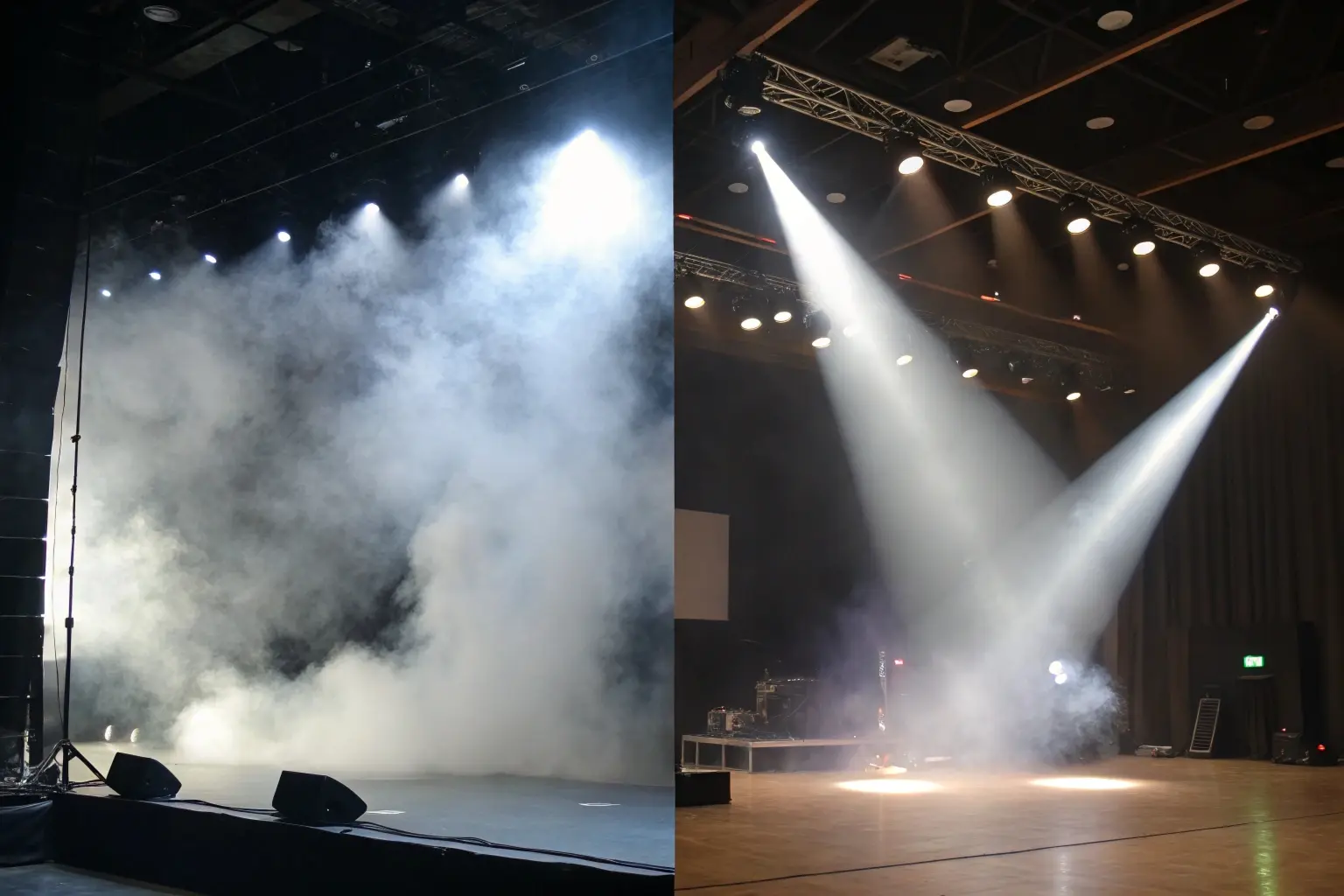
Before I worked in stage production, I honestly thought they were the same thing with different names. They are not.
A haze machine differs from a fog machine in particle size, output style, and purpose: haze creates a fine, long-lasting mist for lighting enhancement, while fog machines produce thick, dense clouds for dramatic visual effects.
Direct Comparison
| Feature | Haze Machine | Fog Machine |
|---|---|---|
| Output style | Continuous | Burst output |
| Particle size | Very small | Large |
| Visibility impact | Minimal | High |
| Main purpose | Enhance beams | Create visible clouds |
Fog machines are noticeable. Haze machines are supportive.
In real-world setups, using fog instead of haze often overwhelms the space and reduces audience visibility.
When Should I Use a Haze Machine?
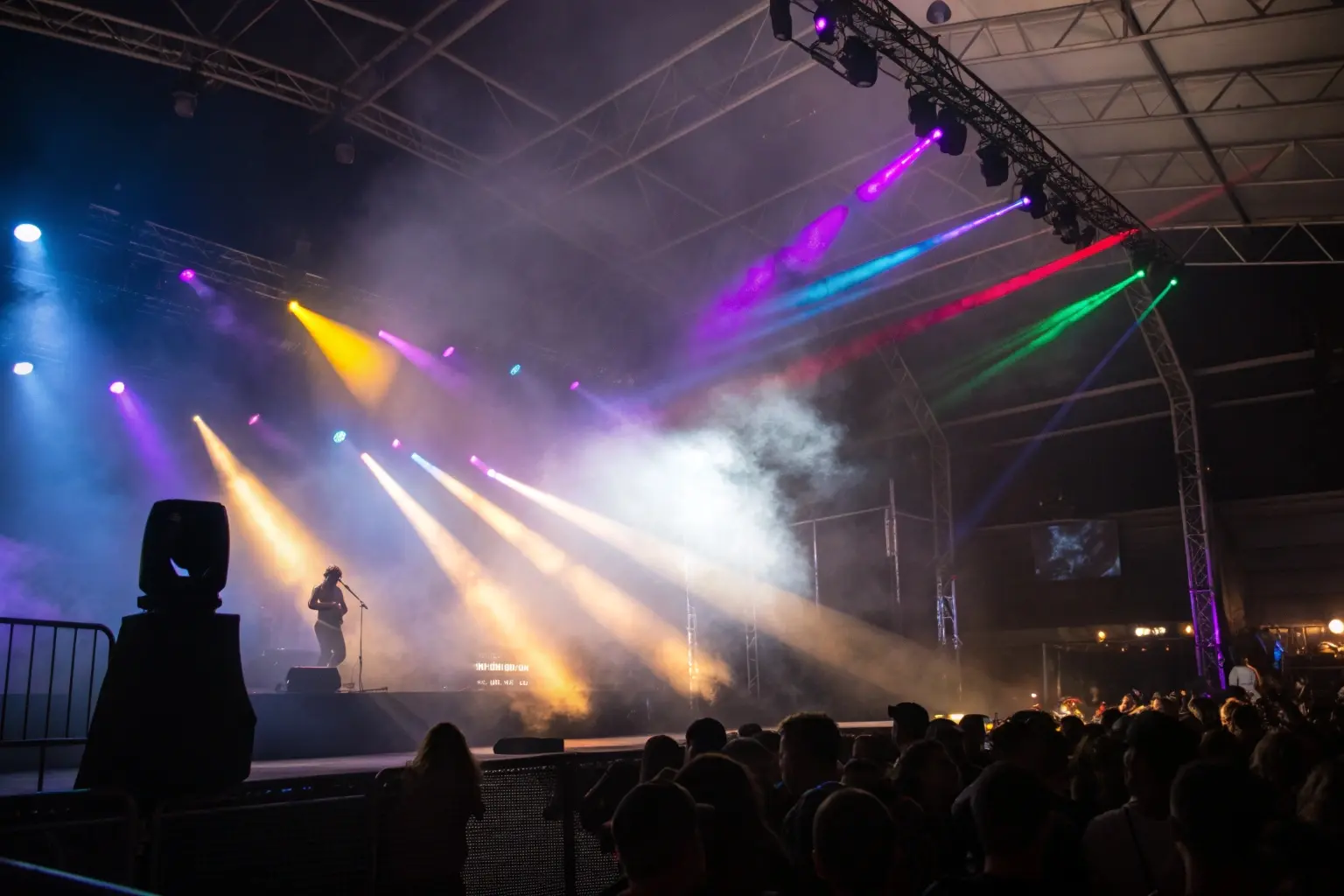
After testing hazers in concerts, churches, and clubs, one pattern became very clear: haze is about lighting, not atmosphere alone.
A haze machine should be used when continuous, even atmospheric coverage is needed to enhance lighting effects in concerts, theaters, churches, clubs, and live events without obstructing visibility.
Ideal Scenarios
- Concert lighting shows
- Theater productions
- Church worship lighting
- Nightclubs
- Film and TV sets
Adjustable Control in Practice
Most professional haze machines allow:
- Output level adjustment
- Fan speed control
- DMX integration for show programming
DMX control is especially useful. It allows lighting consoles to coordinate haze density with specific cues, maintaining consistent visual depth throughout a performance.
Maintenance and Best Practices
From experience, haze machines are reliable when treated properly.
Basic Maintenance Checklist
- Use only compatible fluid
- Clean internal system periodically
- Keep air intake dust-free
- Ensure proper ventilation
Poor maintenance usually shows up as uneven haze or reduced output long before full failure occurs.
Final Thoughts
A haze machine does not create dramatic clouds. It creates atmosphere that supports lighting design.
Once I understood that difference, I stopped expecting visible fog and started focusing on beam clarity, consistency, and control. That shift completely changed how I approach stage environments.